Chicken Slaughter Standards in Indonesia: What Good Processing Looks Like
Every early morning, while most of the city is still asleep, the economic engine of the poultry sector starts turning fast. In muddy traditional markets, the distinctive smell of blood and wet feathers fills the air, signaling the start of conventional chicken slaughter. Far from the bustle of those markets, however, inside sealed, sterile buildings where room temperature is strictly kept below 12 degrees Celsius, a different process is underway. This is where modern poultry slaughterhouses (Rumah Potong Ayam, or RPA) operate, a world where sharp knives meet strict regulation and where a piece of chicken is seen not merely as food but as a vulnerable biological material whose integrity must be protected. Chicken slaughter standards in Indonesia form a complex system of regulations designed to ensure that what reaches the dinner table meets the principles of ASUH (Aman, Sehat, Utuh, dan Halal, meaning safe, healthy, intact, and halal). However, reaching these standards has been a struggle against microscopic bacteria and long-standing habits, all to deliver fresh chicken to the public.
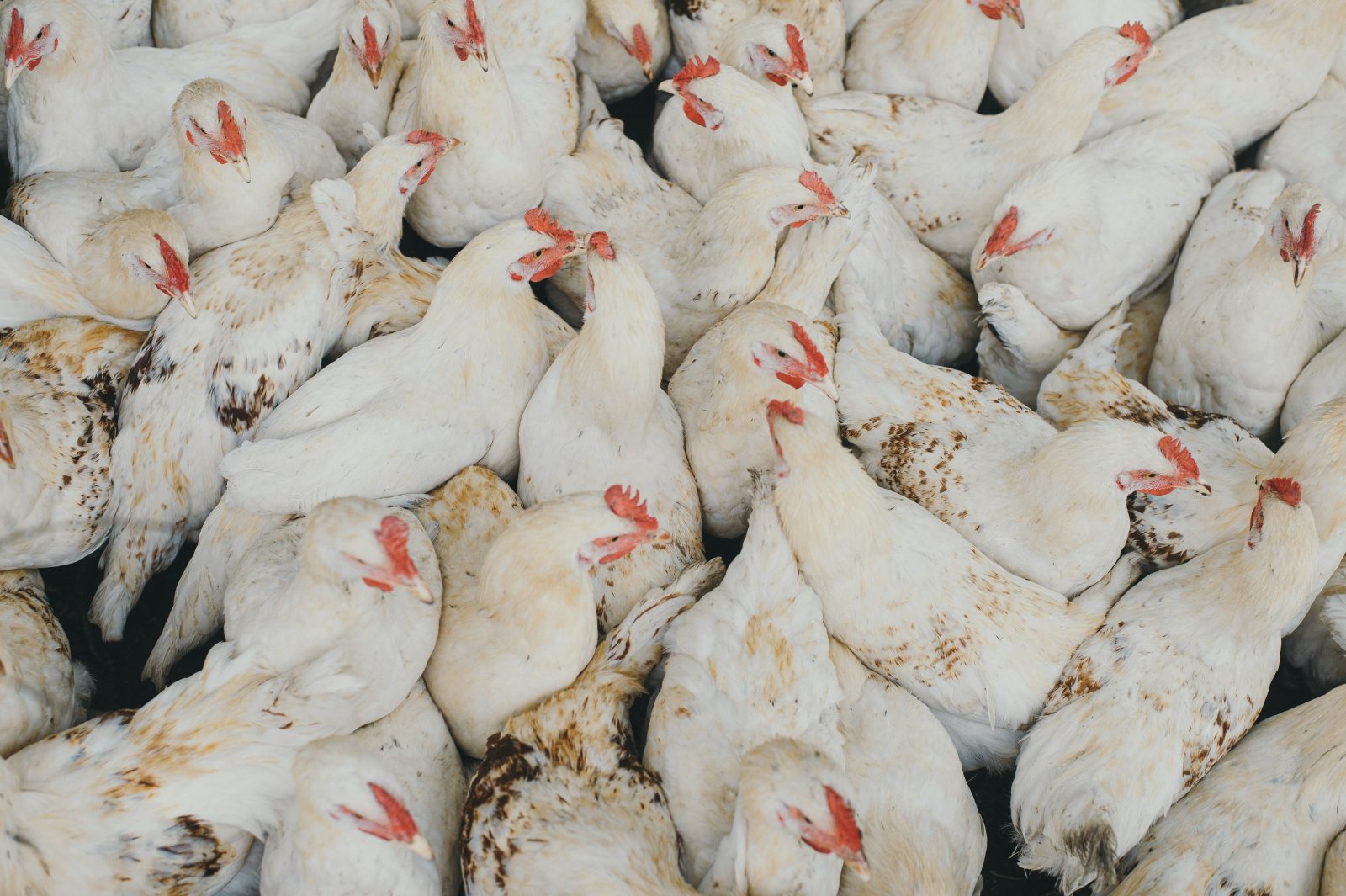
Chicken slaughter standards actually begin long before the knife touches the bird's neck. From the perspective of the modern industry, the process starts with an ante-mortem inspection, or health check before the animal is slaughtered. Dr. Denny Widaya Lukman, a public health veterinarian from Institut Pertanian Bogor (IPB) who is often cited in drafting food safety policy, frequently stresses at scientific forums that this phase is the first line of defense. In the view of experts such as Dr. Denny, chickens that are stressed, sick, or exhausted when they arrive at the slaughterhouse produce meat with a high pH and low quality, and may transmit zoonotic diseases. For this reason, national standards require a rest period, or resting, for chickens that have just arrived from the farm. At RPA facilities certified with a Veterinary Control Number (Nomor Kontrol Veteriner, or NKV), chickens are rested in a room cooled by giant fans to lower their body temperature and calm their heartbeats. This is not merely an animal welfare issue but also a matter of the biochemistry of the meat that will be produced.
When birds enter the slaughter area, this is the critical point where religious law meets technical health standards. Indonesia, with its Muslim-majority population, treats halal compliance as a non-negotiable standard. However, modern halal standardization goes beyond simply reciting the basmalah (the invocation "bismillah"). The chairman of Juleha (Juru Sembelih Halal, or Halal Slaughterers) Indonesia often emphasizes in certification training that slaughtermen at modern RPA must have the technical competence to cut three main structures, namely the esophagus, the trachea, and two jugular veins, in a single swift stroke without lifting the blade. Failure in this technique not only casts doubt on halal status but also causes the chicken to die slowly, which triggers blood retention in the meat. Blood is an excellent medium for bacterial growth, so a chicken that does not bleed out completely will spoil more quickly. This is why the length of time allowed for complete bleeding, known as bleeding time, is precisely regulated, typically at least 3 minutes before the chicken enters the hot-water immersion stage known as scalding.
The most striking difference between traditional and standardized slaughter lies in temperature management and cross-contamination. Under industry standards referring to SNI 99002:2016 on Halal Slaughter of Poultry, there is a strict separation between the dirty area (red zone) and the clean area (green zone). The dirty area includes the live-bird receiving area, hanging, slaughtering, and feather removal. The clean area begins with evisceration, the removal of internal organs, and continues through packaging. A Quality Assurance (QA) manager at one of the largest poultry integrators in West Java, let's call him Budi Santoso, explains that the biggest challenge in daily operations is not the machines but human discipline in not crossing these zones. Budi notes that bacteria such as Salmonella and E. coli, which live naturally in the digestive tract of chickens, can multiply rapidly if the intestines rupture during removal or if the knives used are not sanitized regularly. In modern RPA, automated eviscerator machines work with robotic precision to pull out the viscera without tearing the intestines, a standard that is difficult to achieve consistently in small-scale manual slaughter.
Another crucial aspect, often misunderstood by the general public, is the concept of the cold chain. Many people believe that "fresh" chicken is chicken that has just been slaughtered and still feels warm when held at the market. In fact, according to international and national food safety standards, the warm condition after slaughter is a danger zone in which bacteria divide every 20 minutes. Standardized chicken slaughter requires chilling, or immediate cooling, once the chicken has been cleaned. The temperature of the carcass (chicken meat) must be dropped drastically to below 4 degrees Celsius within a short time. This process typically uses a screw chiller, a giant tank of ice water in which chickens slowly tumble against the flow of the cold water. Achmad Dawami, General Chairman of the Indonesian Poultry Workers Association (Perhimpunan Insan Perunggasan Rakyat Indonesia, or PINSAR), often stresses that consumer education on this matter is vital. Frozen or chilled chicken from NKV-certified RPA is in fact far more hygienic than "warm" chicken left at open room temperature for hours at the market, where it is vulnerable to flies and dust.
NKV certification is the culmination of all these standards. NKV is not merely a business license but legitimate proof that the government has verified that the business applies proper sanitary hygiene standards. To obtain NKV, a slaughterhouse must meet building construction requirements: no right-angled corners (they must be curved for easier cleaning), waterproof and non-slip floors, and even water quality for washing carcasses that must match drinking water standards. This is where reality often clashes with small household slaughterers. The investment needed to meet water and waste sanitation standards is very large. Blood and feather waste may not be discharged directly into rivers but must pass through an adequate Wastewater Treatment Plant (Instalasi Pengolahan Air Limbah, or IPAL). These standards are not designed to shut down small businesses but to prevent environmental pollution and the spread of disease.
Beyond physical and microbiological aspects, chicken slaughter standards are also expanding into stricter animal welfare requirements, particularly for export markets and premium retail. The use of stunning before slaughter has become standard in large industries. The goal is to render the chicken unconscious so that it does not feel pain during slaughter, while also helping the slaughterman perform the task with precision. The commonly used method is water bath stunning, in which the chicken's head touches water carrying a measured, weak electrical current. The debate over stunning was once heated among religious scholars, but the Indonesian Ulema Council (Majelis Ulama Indonesia, or MUI), through its fatwa, has permitted stunning on the condition that the animal is only temporarily stunned and does not die from the electric shock. Calibrating stunning equipment is an integral part of routine audits, ensuring the voltage is just right: not so weak that the chicken remains conscious, and not so strong that it kills the chicken before slaughter.
Ultimately, chicken slaughter standardization is an intricate orchestration involving veterinarians, halal auditors, machine technicians, and microbiologists. The goal is singular: to protect consumers. Behind the neatly packaged frozen chicken in supermarkets lies a long trail of temperature monitoring, laboratory testing, and strict procedural compliance. The shift from wet-market culture to chilled carcass products is progressing slowly in Indonesia, but the direction of change is certain. Rising awareness among the middle class about food safety and nutrition is pushing the industry to keep tightening its standards. As public health veterinary practitioners often say, food safety is not a coincidence but the result of deliberate, measured, and standardized effort. Choosing chicken slaughtered to standard is not just about taste; it is a long-term investment in health and a form of respect for the life of the animal sacrificed for human nutrition.