ASEAN50 Indonesia, Explained
Thursday, 29 October 2026
Technology

Mixing vs Mastering: What's the Difference?
By Redaksi ASEAN50 3 min read
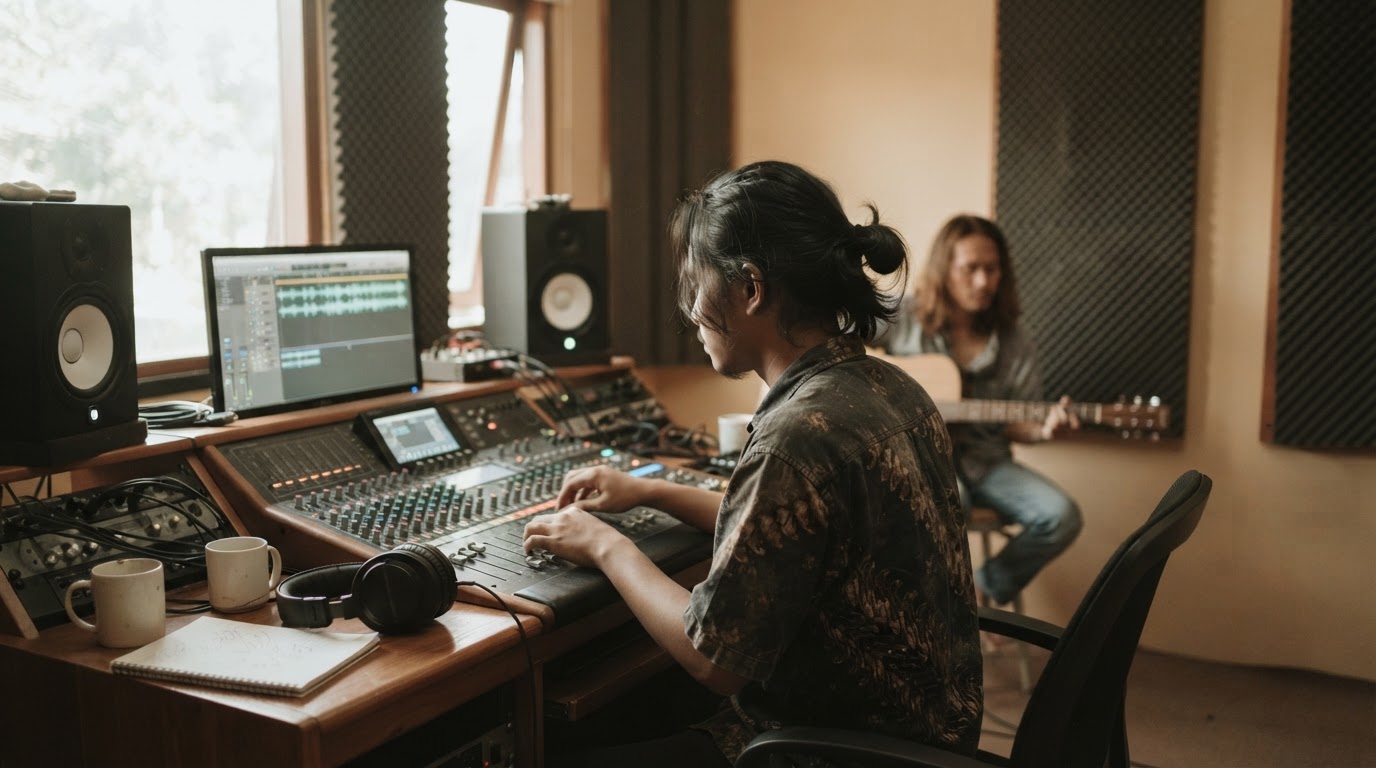
A man adjusts an audio console in a recording studio while another man plays guitar in the background.
AI illustration
Recording studio package - A recording studio is a place where musicians record audio, produce sound, carry out mixing, and handle other tasks related to the music world. Studios come in different sizes. Some are small, such as a home recording room or home studio, while others are large enough to hold many musicians. Musicians are not the only people involved, though. A music recording session usually includes an engineer, a producer, a mixer and a premaster. Each of these roles is different. The engineer is responsible for setting up the equipment in the studio. The producer judges whether the recording matches what they had in mind. A mixer takes the recorded track and combines the track-track well, while the masterer adds the final touch. In practice, however, many people wonder whether mixing and mastering are the same activity or two different ones. Before buying a recording studio package, read the explanation of mixing and mastering below.  

The Mixing Process

As the name suggests, mixing is the blending of audio tracks that are to be combined. In other words, mixing is a multitrack balancing process. Many tracks can be combined, including vocal tracks, guitar tracks, drum tracks, bass tracks, and others. So what activities take place during mixing?
  1. Balancing
Balancing aims to set the volume of each track so that the overall mix sounds good and matches the intended result. For example, the vocals, guitar, drums, and bass should sit together in a harmonious balance so the music is pleasant and comfortable to listen to.
  1. Equalizing
Often abbreviated as EQ, this step is used to cut or boost frequencies as needed. For example, if the vocals sound too boomy, EQ is what smooths them out so they are easier to listen to. EQ can also give the audio a character that suits the sound you want.
  1. Compressing
This is the process of leveling audio whose dynamic range is too wide. For example, the dynamic range of a vocal that rises and falls when singing high or low notes can be addressed through compressing.
  1. Effects
The final step is adding effects, such as chorus, reverb, delay, and other effects as needed. The Mastering Process Mastering is the process that takes place after mixing. Basically, it is a finishing refinement of the mix. In that sense, mastering is only used to polish the music when something sounds less than ideal. However, mastering has its own benefits. The final recording feels more balanced, dense, and professional, and its sound quality becomes richer and more pleasant to listen to. That is the difference between mixing and mastering, so that before buying a recording studio package, you will fully understand how a song is made.