How to Set Up Metro Ethernet for Office Networks
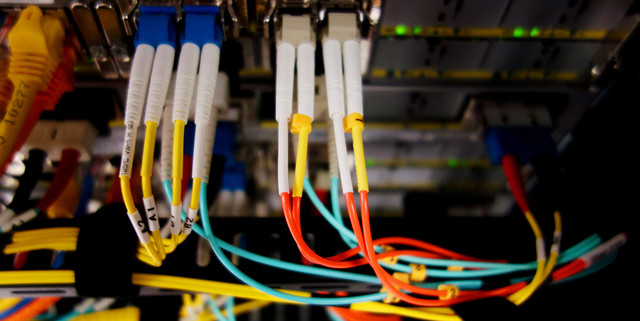
Metro Ethernet is a network solution that uses Ethernet technology to connect multiple sites within a limited geographic area, such as a city or metropolitan region.
This technology is widely used in business and organizational settings where fast, reliable connections between nearby locations are needed. Here are the main characteristics of Metro Ethernet:

- Use of Ethernet: Metro Ethernet relies on the Ethernet protocol as its base technology for transmitting data. This makes it easy to adopt, because Ethernet is a very common technology in local area networks (LAN) and everyday use.
- Fast Connections: One of the main advantages of Metro Ethernet is its speed. It can provide high-speed connections suitable for data-heavy applications, such as large file transfers, video streaming, and VoIP.
- Scalability: Metro Ethernet solutions are highly scalable, which means you can easily add locations or change connection speeds as your needs require. This is useful for growing businesses.
- Quality of Service (Quality of Service/QoS): Metro Ethernet often supports QoS, which allows you to give priority to certain types of traffic. This matters if you have applications or services that require consistent performance.
- Centralized Network Management: Metro Ethernet is typically managed from a data center or control center, enabling efficient network monitoring and management.
- Point-to-Point or Multipoint Connections: You can configure Metro Ethernet as a point-to-point connection or a multipoint connection, depending on your needs. In a multipoint configuration, several locations can connect to one central location.
- Support for Additional Services: Metro Ethernet often supports a range of additional services, such as VoIP, VPN (Virtual Private Network), and cloud services.
- Competitive Cost: Metro Ethernet is often competitively priced compared with other network technologies, making it an attractive choice for businesses seeking fast connections within a metropolitan area.
Metro Ethernet Topologies
Metro Ethernet is a network technology that can be implemented in various topologies, depending on the needs and intended network design. Here are some commonly used Metro Ethernet topologies:Metro Ethernet Point-to-Point (P2P)
This is a simple topology that connects two locations directly, similar to a point-to-point connection. It is typically used to link two nearby business locations, such as a head office and a branch office, or a data center with an external site. It uses a direct path and is often used to connect strategic locations that require fast, reliable connectivity.Metro Ethernet Point-to-Multipoint (P2MP)
This topology connects one central site with several remote sites. It is typically used in scenarios where one location (the central site) needs to communicate with several external locations, such as in cloud-based network implementations or content distribution. P2MP allows efficient bandwidth allocation across the various locations.Metro Ethernet Ring
A Metro Ethernet ring is a ring-shaped network topology in which data flows through the network from one location to the next until it returns to the starting point. It is a redundant topology often used to ensure high availability. If part of the ring is disrupted, data can still flow through an alternative path. Metro Ethernet rings are often used in metropolitan networks that require very high availability, such as networks run by service providers or telecommunications services.Metro Ethernet Tree (Hierarchical)
This topology combines several P2MP connections to form a tree (hierarchical) structure. It is used in complex metropolitan networks where data must move between a central site and a number of remote sites within a structured hierarchy. Tree topology provides good control over data flow and bandwidth allocation.Metro Ethernet Mesh
A mesh topology connects every location to all other locations, creating a highly interconnected network. It is used in environments where every location needs to communicate directly with every other location. Mesh topology is very efficient in terms of redundancy and availability, but it requires greater bandwidth allocation because every location must be connected to all the others. The choice of Metro Ethernet topology depends on your specific needs and network objectives. For example, if you need high availability, you may choose a ring topology. If you have many locations that need to connect with one another, a mesh or tree topology may be more suitable. A clear understanding of your business needs and the characteristics of the various Metro Ethernet topologies will help you design a network that fits.Metro Ethernet Equipment
Metro Ethernet involves a range of network devices used to build and manage Ethernet networks within a metropolitan scope. Here are some commonly used Metro Ethernet devices:- Metro Ethernet Switch: A Metro Ethernet switch is the core component of a Metro Ethernet network. It is a device that connects and directs data traffic between the various locations in the network. Metro Ethernet switches support many Ethernet ports and typically have advanced traffic management capabilities.
- Metro Ethernet Router: A Metro Ethernet router is a device used to connect a Metro Ethernet network to a wider network, such as a wide area network (WAN). This router manages traffic at the Layer 3 (IP) level and can connect the Metro Ethernet network to the Internet or other networks.
- Media Converter: A media converter is used to convert the signal format from one physical medium (such as fiber optic) to another physical medium (such as copper). It is used to connect networks with different types of cabling or transmission technologies.
- Metro Ethernet Access Device: A Metro Ethernet access device is used to connect customers or locations to the Metro Ethernet network. It can be an Ethernet switch placed at the customer's site or a specialized device used by a Metro Ethernet service provider to connect customers to its network.
- Metro Ethernet Modem: A Metro Ethernet modem is used to convert the digital signal coming from the Metro Ethernet network into an analog signal that customer devices can use. It is often used in fiber-optic-based customer access scenarios.
- Signal Repeater: A signal repeater is used to extend the reach of a Metro Ethernet network by strengthening the signal as it travels along the transmission path. It helps offset signal loss over long distances.
- Network Management Device: This is a device used to manage and monitor a Metro Ethernet network. Network management devices can be used to configure settings, monitor performance, and detect problems in the network.
- Security Device: To protect a Metro Ethernet network from security threats, such as cyberattacks, security devices like firewalls, IDS (Intrusion Detection System), and IPS (Intrusion Prevention System) can be used.
- OAM (Operations, Administration, and Maintenance) Device: OAM devices are used to manage the operational, administrative, and maintenance aspects of a Metro Ethernet network. They help with monitoring, troubleshooting, and efficient network maintenance.
Conclusion
Using Metro Ethernet offers a number of benefits across a range of business and communication environments. Here is a summary of the advantages of using Metro Ethernet: Fast and Reliable Connections: Metro Ethernet provides high-speed connections that enable fast and reliable data transfer. This is especially important for businesses and organizations that depend on data-heavy applications and efficient communication.- High Availability: Metro Ethernet topologies, such as the ring topology, provide high availability through backup paths that keep traffic flowing even if a disruption occurs.
- Scalability: Metro Ethernet solutions are highly scalable and can be changed or expanded as the business grows. You can add more locations or increase connection speeds as needed.
- Security: Metro Ethernet can be integrated with additional security layers, such as firewalls and IDS/IPS, to protect the network from cyber threats.
- Affordable Cost: Metro Ethernet is often competitively priced compared with other network technologies, making it an affordable option for many businesses. Installation and monthly subscription costs can often be adjusted to fit a business budget.
- Quality of Service (Quality of Service/QoS): Metro Ethernet supports QoS, allowing customers to give priority to certain types of traffic, such as voice or video services.
- Better Collaboration: The fast, reliable connections provided by Metro Ethernet enable better collaboration among connected business locations. This supports efficient data exchange and high-quality video conferencing.
- Public Service Offerings: Many Metro Ethernet providers offer public services that let businesses connect to the metropolitan network quickly without having to build their own infrastructure.
- Better Cloud Computing: Metro Ethernet supports faster and more reliable access to cloud services and data centers, which is increasingly important in the era of cloud computing.
- Operational Efficiency: Metro Ethernet supports operational efficiency by enabling centralized network management and efficient monitoring.